Strategic geography
Its location between Central Anatolia and routes to the south connected the region with networks of movement and communication throughout history.


Zoldura Mound, approximately one kilometre north of the centre of Hatunsaray, is the multi-layered settlement identified with ancient Lystra.
Lystra's importance extends beyond its identity as a Roman colony and its place in early Christian narratives. It also lies in the continuity of settlement from earlier ages into later periods.
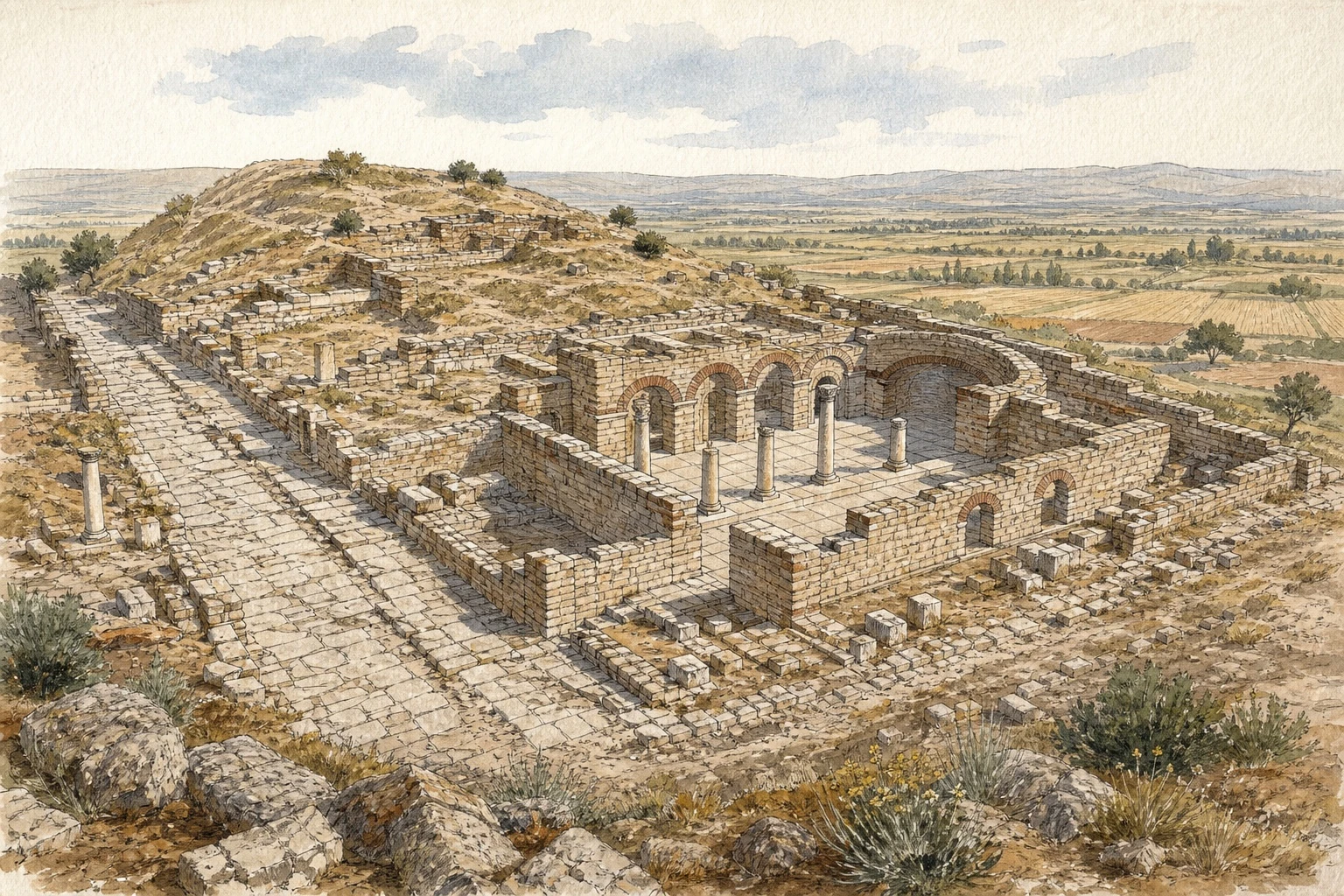
Zoldura Mound is a large settlement area extending approximately 740 metres east to west and 650 metres north to south. Its height of about 31.7 metres reflects the accumulation of cultural deposits formed over successive periods.
These dimensions show why it is inadequate to think of Lystra merely as a small sanctuary or a visitor site defined by a single structure. The mound should be considered together with the surrounding areas of low-lying settlement.
The city's significance arises from the combination of the military, administrative, religious, and regional roles it assumed in different periods.
Its location between Central Anatolia and routes to the south connected the region with networks of movement and communication throughout history.
Known as Colonia Iulia Gemina Felix Lystra, the city was incorporated into Rome's military and administrative system as part of the Augustan policy of colonisation.
The textual tradition associated with Paul, Barnabas, and Timothy made Lystra one of the recognised centres of Christian history.
Monumental religious architecture and its episcopal identity demonstrate Lystra's regional importance in Late Antiquity.
The accounts of Lystra in the New Testament explain the city's place in religious history. A historical text is not, however, an archaeological find; the two kinds of evidence may complement one another, but neither can substitute for the other.
The textual account describes the arrival of two early Christian figures in Lystra and their encounters in the city.
In Christian tradition, Lystra is one of the places associated with the background of Timothy, Paul's travelling companion.
The city's later designation as an episcopal centre demonstrates the continuity of its religious importance.
The first-journey narrative in Acts 13–14 describes an extensive network of movement that reached Lystra through Cyprus, Pamphylia, and Central Anatolia, before returning to the same inland stops.

The Roman provincial coins struck in Lystra's name were more than instruments of payment. Rulers' portraits, the colonial title, agricultural imagery, and goddesses reveal the city's political identity and how it represented itself.

Marcus Aurelius · Caesar Date: c. 147–161 CE
The bare head of a short-bearded young Marcus Aurelius faces right. The title “Caesar” indicates that the coin belongs to his status before he became emperor.
A she-wolf stands right, turning her head left as she suckles the twins Romulus and Remus beneath her. This image from Rome's foundation story directly connects Lystra's colonial identity with Rome.

Augustus Reign: 27 BCE–14 CE
The laureate head of Augustus faces left, with a cornucopia behind the portrait.
A colonist advances left with a plough drawn by two humped oxen. The scene symbolically evokes the foundation of the Roman colony and its relationship with the land.

Titus Reign: 79–81 CE
The laureate portrait of Titus faces right. The emperor's name and titles appear in the surrounding legend.
A bust of Athena faces left, wearing a crested helmet. This type brings Lystra's Roman identity together with the classical image of a protective goddess.

Antoninus Pius Reign: 138–161 CE
The laureate, bearded portrait of Antoninus Pius faces right.
The veiled Ceres/Demeter sits facing left, holding a poppy and two ears of grain in one hand and a long sceptre in the other. Together with the small altar before her, the composition emphasises agriculture and abundance.
These images are not museum or auction photographs, but new artistic renderings based on descriptions in scholarly catalogues. They do not reproduce a specific excavated object or an individual coin. Diameter and weight figures are type averages from catalogued examples; actual specimens may vary.
In the account related in Acts, Paul and Barnabas's encounters in the city, the healing narrative, and their attempt to prevent a sacrifice are prominent. These scenes have been reinterpreted within different artistic traditions over many centuries.


The depictions of Paul in this section are new drawings inspired by the iconographic traditions of later centuries. They are neither portraits surviving from Paul's lifetime nor archaeological objects found at Lystra.
Landscape images suggesting the possible appearance of Zoldura Mound and Lystra are artistic interpretations created to evoke the site's atmosphere; they should not be regarded as definitive architectural reconstructions or documentary evidence. The Kilistra drawings appear only in the separate section explaining the distinction between the two places.
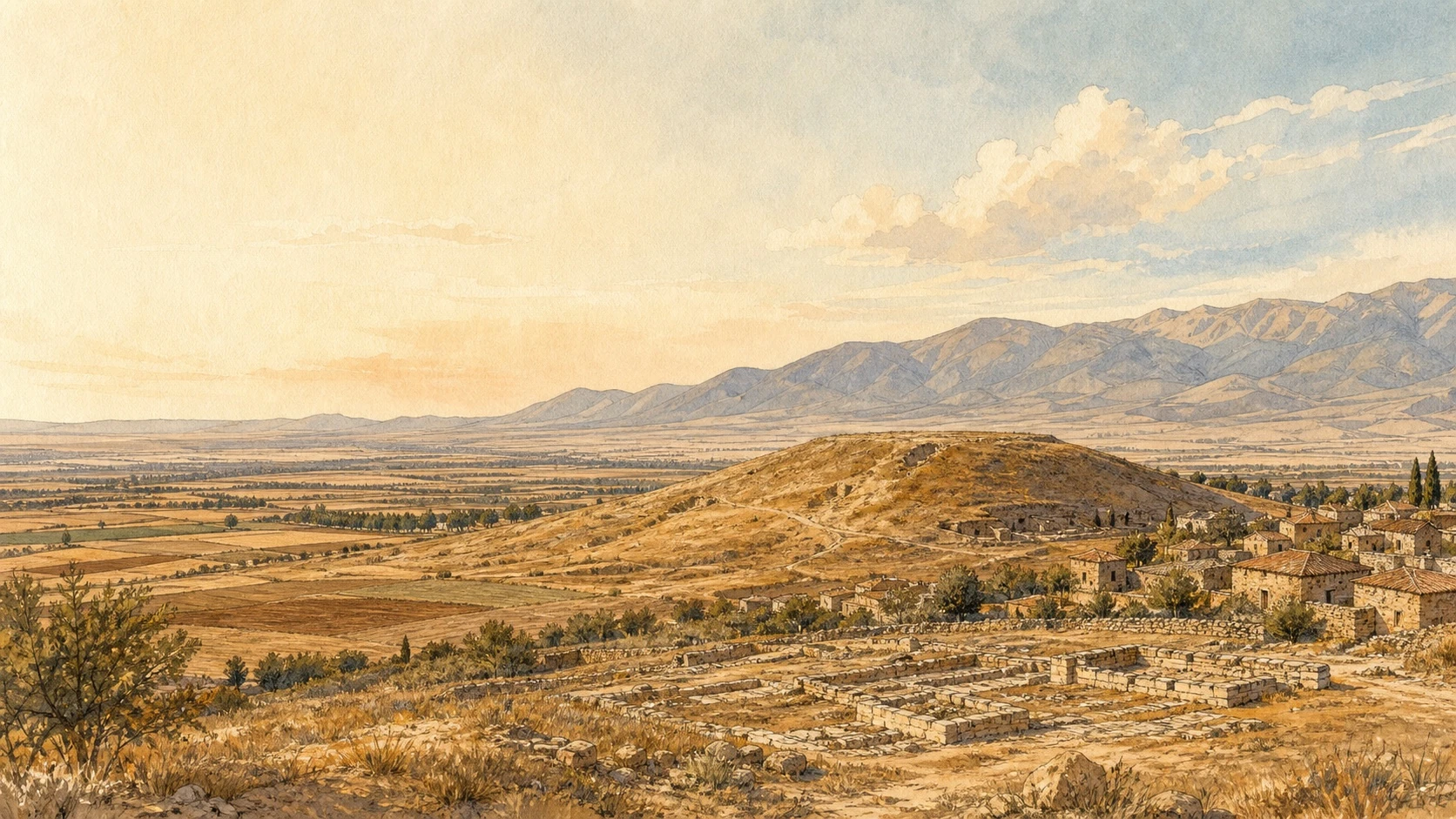
Lystra is Zoldura Mound near Hatunsaray. Kilistra is a different settlement around Gökyurt, with another location and a distinct historical character. Although the similarity of their names sometimes causes confusion, their geographical and archaeological identities are separate.
Read the visitor informationThe following drawings introduce Kilistra's rock-cut spaces. They do not represent Lystra's mound landscape; they are included here to make the visual and spatial distinction between the two sites clear.


Hatunsaray · Lystra.