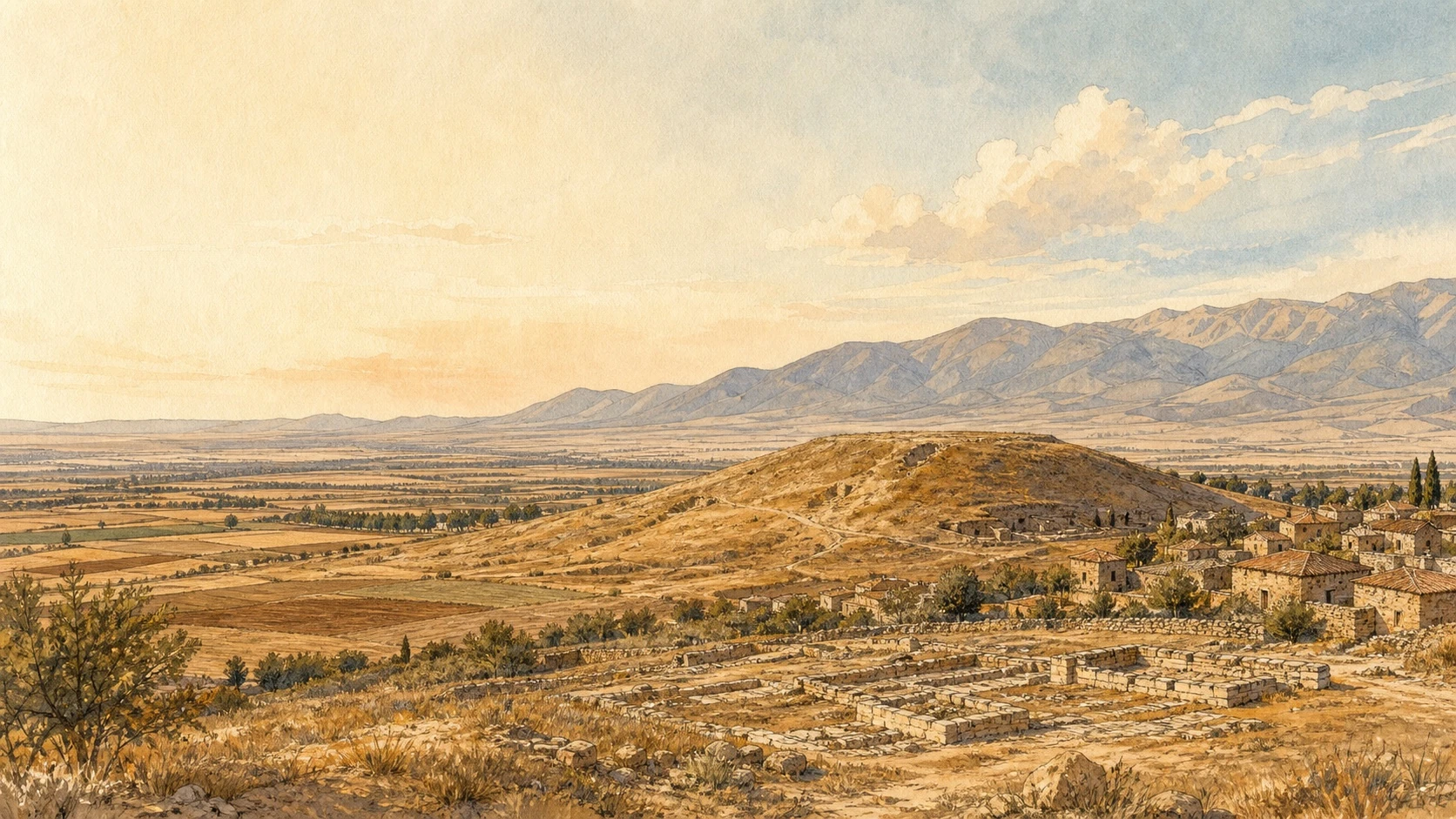
Original illustration interpreting the historic landscape of Hatunsaray and Lystra

Time, layer by layer.

The history of Hatunsaray and Lystra is too long and too layered to be explained by a single beginning or a single civilisation.

Historical framework

Surface finds from Zoldura Mound point to early phases of settlement; the name Lystra becomes prominent in the Roman period, while Hatunsaray carries the region's settlement memory through later centuries.

Timeline

From the earliest traces to modern identification.

This chronology summarises the region's broad historical development for interpretive purposes. Dates may be refined or revised by new research.

Chalcolithic

Early settlement traces

Surface material identified around the mound suggests that the sequence of settlement reaches back to very early periods. These finds are key indications that the site does not belong solely to classical antiquity.
Bronze and Iron Ages

Long-term settlement

Pottery and surface finds from different periods indicate that the mound was used repeatedly over time. Its settlement layers suggest connections with the region's routes of passage and areas of production.

Hellenistic Period

The landscape of Lycaonia

The area around Hatunsaray is understood as part of the Lycaonian cultural region in southern Central Anatolia. Local traditions and influences from neighbouring centres shaped the cultural setting of this period.

Augustan Period

The Roman colony of Lystra

Lystra received colonial status within the Roman Empire's military and administrative order in the region. Because different dates have been proposed for the colony's precise foundation, the Augustan period provides the most secure historical framework.

1st century CE

Early Christian narratives

New Testament texts associate Paul, Barnabas, and Timothy with Lystra. These accounts establish the city's importance in religious history; textual tradition and material evidence should nevertheless be assessed separately.

Late Antiquity

An episcopal centre

In Late Antiquity, Lystra became an important settlement within the Christian landscape. Traces of monumental religious architecture reflect the city's regional significance.

Seljuk Period

A changing settlement pattern

Life in the region continued around different centres. Reused architectural elements and finds from successive periods point to a changing settlement world around the ancient site.

Ottoman Period

The district of Hatunsaray

Within the Ottoman administrative system, Hatunsaray appears as a regional centre connected with surrounding villages. Agriculture, animal husbandry, water structures, and the transport network formed the basis of everyday life.

1885

Identification of Lystra's location

A Latin inscription found in the area became a turning point in identifying the location of ancient Lystra. It strengthened the scholarly connection between the city known from historical texts and Zoldura Mound.

Today

A shared heritage to be protected

The value of Hatunsaray and Lystra lies not only in their past importance, but also in the relationship these layers have with today's landscape and local life. Interpretation seeks above all to make this integrity visible.

On the name Lusna

Some researchers associate the name Lusna, recorded in ancient texts, with this area. This is an intriguing research proposal and should not be treated as a confirmed identification.

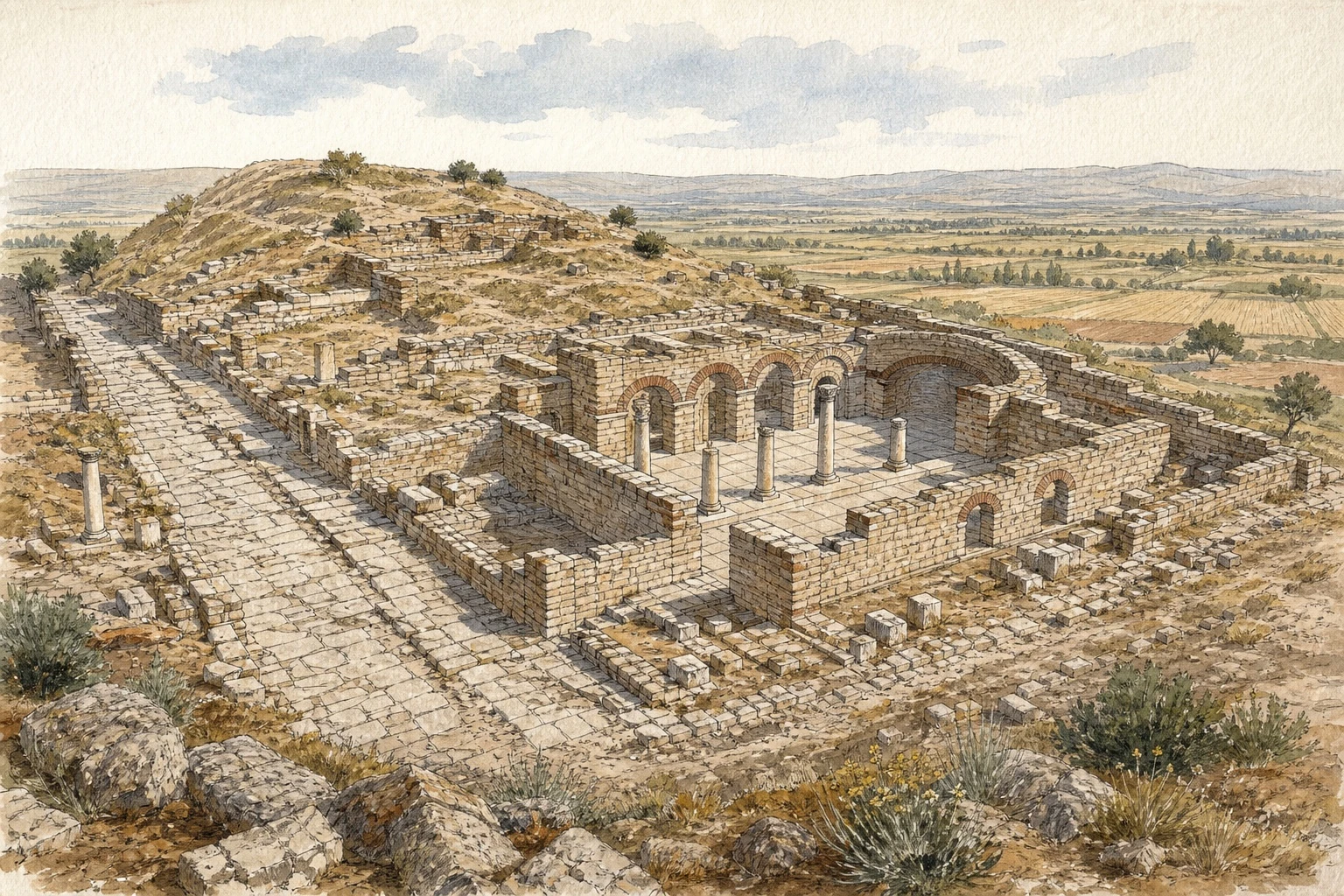
Original interpretive illustration of Lystra
A city through time

Explore Lystra on its own page.

Learn more about the ancient city's location, its identity as a Roman colony, and its place in early Christian history.

Explore Lystra

Hatunsaray · Lystra.