Hatunsaray settlement
Observe the rural fabric, water structures, and everyday life. Respect local privacy and private property.

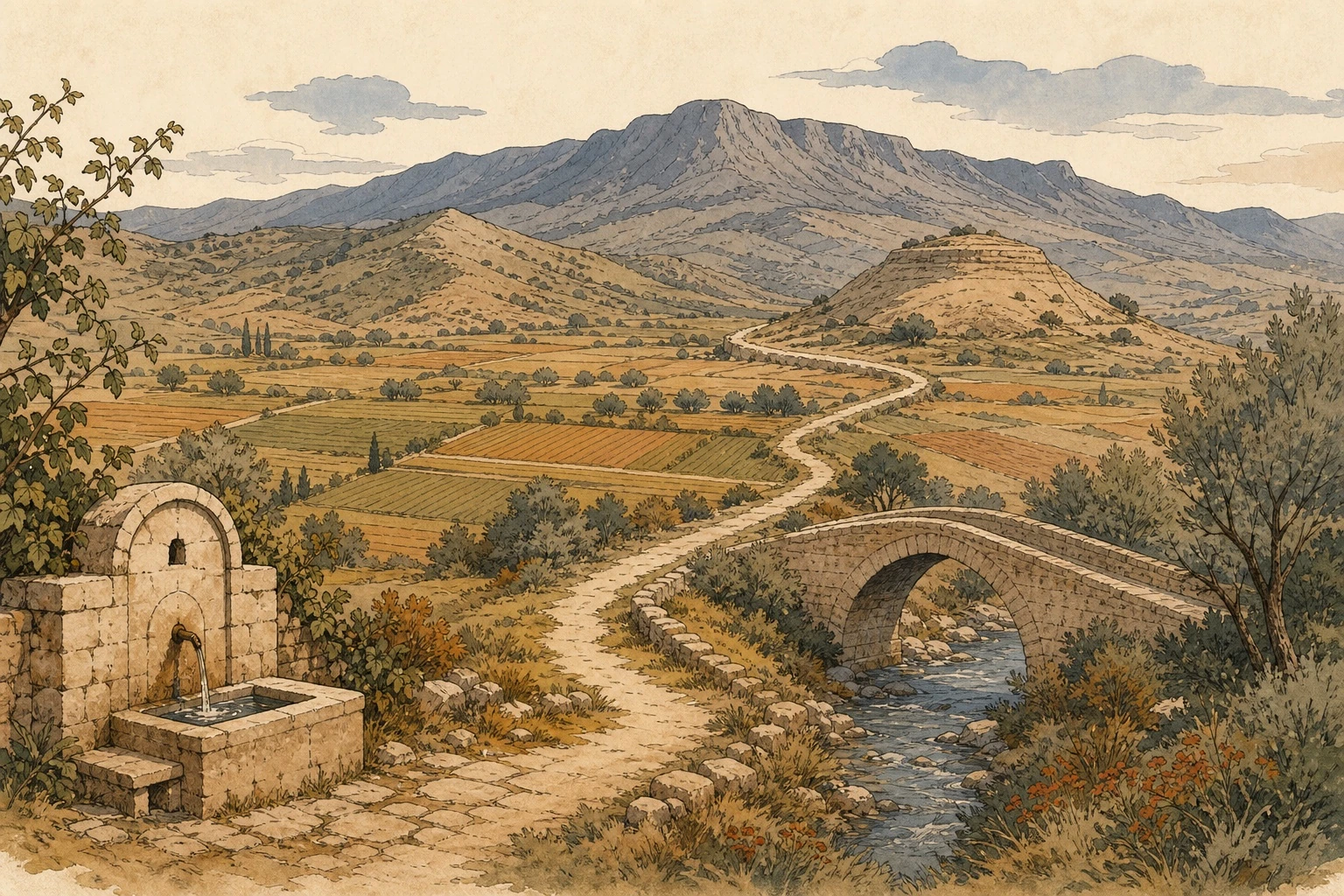
Hatunsaray and Lystra are not an open-air backdrop, but a real landscape where a living settlement and vulnerable cultural assets coexist.
The best visit is one that does not disrupt daily life and that respects terrain conditions, property boundaries, and the protection of cultural assets.
No fixed official walking route is proposed. The sequence below offers a thematic way to understand the area; conditions on the ground may change.
Observe the rural fabric, water structures, and everyday life. Respect local privacy and private property.
Observe farmland, roads, and the water network as parts of a single historic setting. Do not enter cultivated land.
View the site from a distance and from permitted routes. Do not excavate, climb, or remove stone or soil.
Hatunsaray lies in the rural part of Meram, south of Konya city centre. The route leads from the city centre towards Meram and then follows the connection to Hatunsaray.
Zoldura Mound, identified with Lystra, lies approximately one kilometre north of central Hatunsaray. As road, parking, and access conditions may change seasonally, follow local guidance on the day of your visit.
Even a seemingly minor intervention may harm the archaeological context, building materials, or local life.
Do not move pottery, stone, metal, or any other fragment; remove nothing from the site.
Do not climb on walls, write on surfaces, remove stones, or light fires.
Do not enter fields, gardens, or livestock areas without permission, and do not obstruct gates or passages.
Take away everything you bring, and do not pollute the natural environment or water sources.
Ask permission before photographing people, homes, or private spaces.
Do not enter closed areas; follow safety barriers, protected-area boundaries, and instructions from authorised personnel.
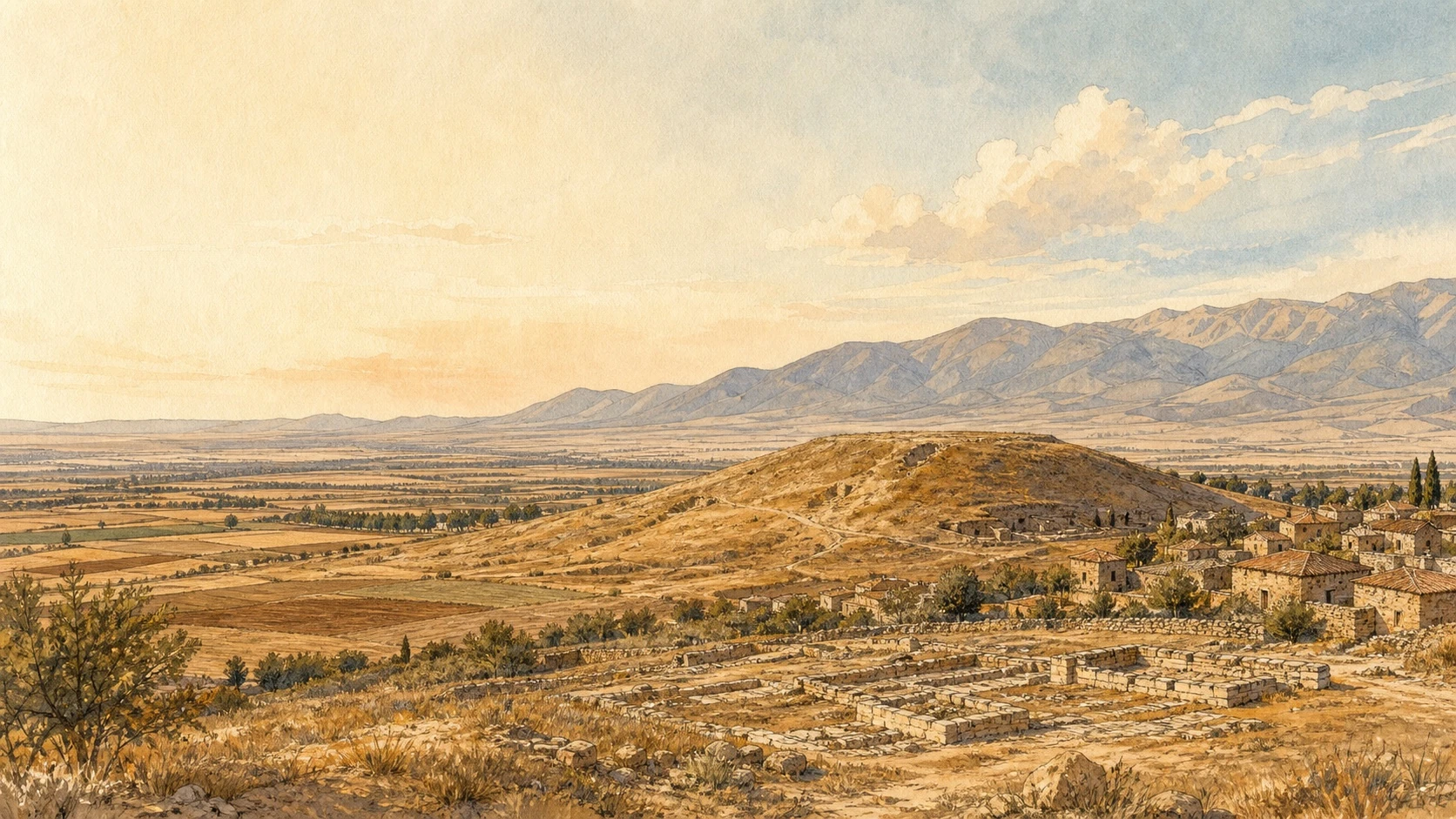
Make your visit more meaningful by learning about Hatunsaray's living settlement and Lystra's historical layers.
Hatunsaray · Lystra.