Fountains and cisterns
They collect, store, and provide water for shared use. Their inscriptions, stonework, and traces of repair may carry evidence from several periods.


Hatunsaray's heritage is a living whole, extending from monumental structures to traces of everyday use, and from the agricultural landscape to local narratives.
A fountain is more than a stone structure; it is a meeting point for access to water, shared use, journeys, and neighbourhood memory.
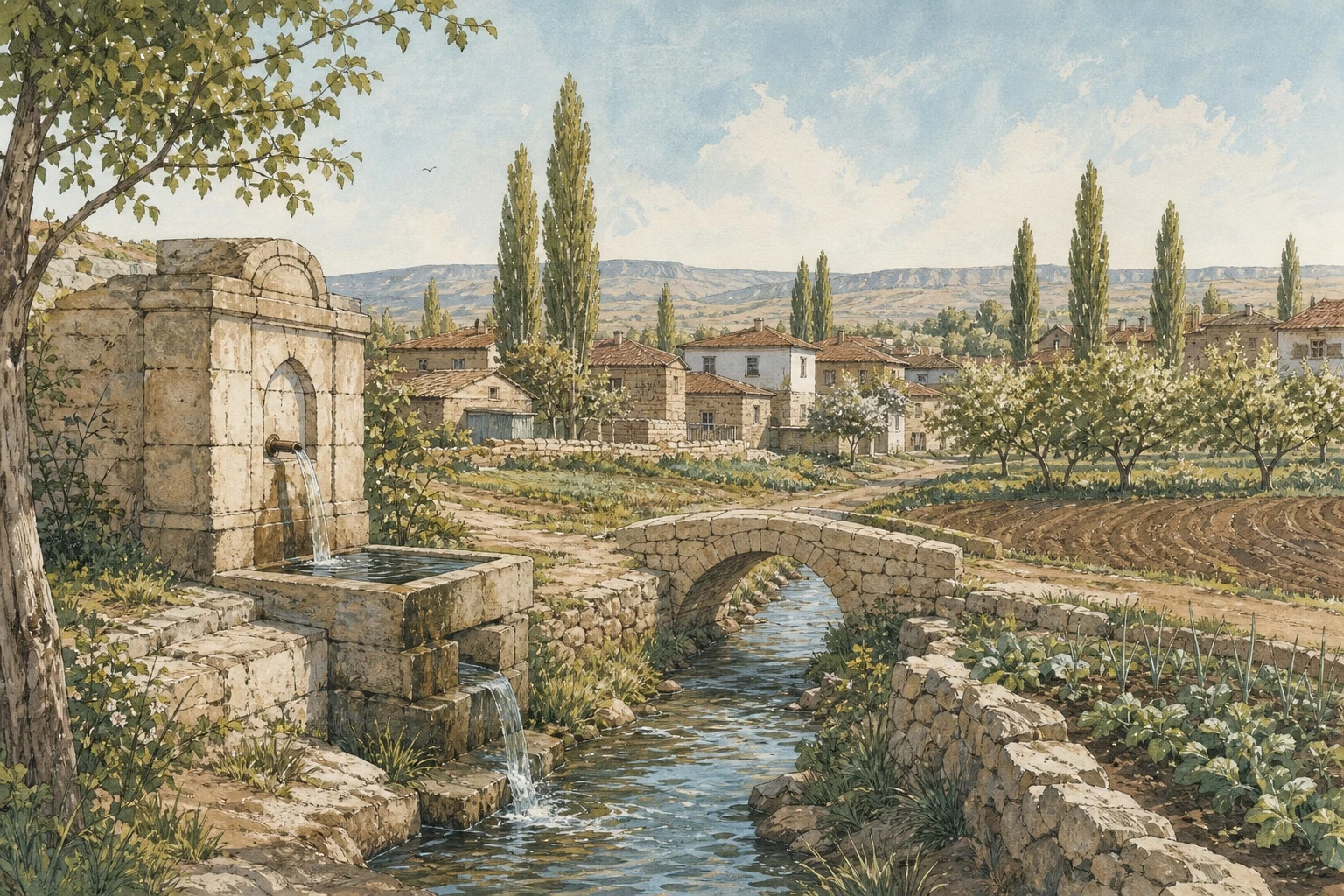
Drought and seasonal variation have made the protection and sharing of water fundamental concerns of rural life. Fountains, cisterns, water channels, and bridges are local responses to this need.
These structures are as important for their location as for their architectural detail. Positions beside a road, at a settlement entrance, on a garden boundary, or in a shared space explain the social role of water structures.
The modest structures around Hatunsaray were shaped by durability and use rather than display. Their value lies in the enduring relationship they have established with their surroundings.
They collect, store, and provide water for shared use. Their inscriptions, stonework, and traces of repair may carry evidence from several periods.
These are small-scale engineering solutions that make it possible to cross seasonal watercourses and reach fields and neighbouring settlements.
The settlement fabric, built with stone, timber, and earth-based materials, reflects a way of life adapted to the climate and forms of production.
If the practices and narratives that created these structures disappear while the buildings are preserved, an important part of their cultural meaning is lost.
Knowledge of springs, old roads, field boundaries, and seasonal transitions is a practical understanding of geography passed down over generations.
The division of labour around sowing, tending, harvest, and preparation for winter establishes the rural community's shared order of time.
Skills such as selecting stone, laying a wall, opening a watercourse, and maintaining a roof are part of local knowledge of materials.
Place-names, family narratives, and former patterns of use may preserve details absent from written documents; their accuracy should be assessed within their own context.
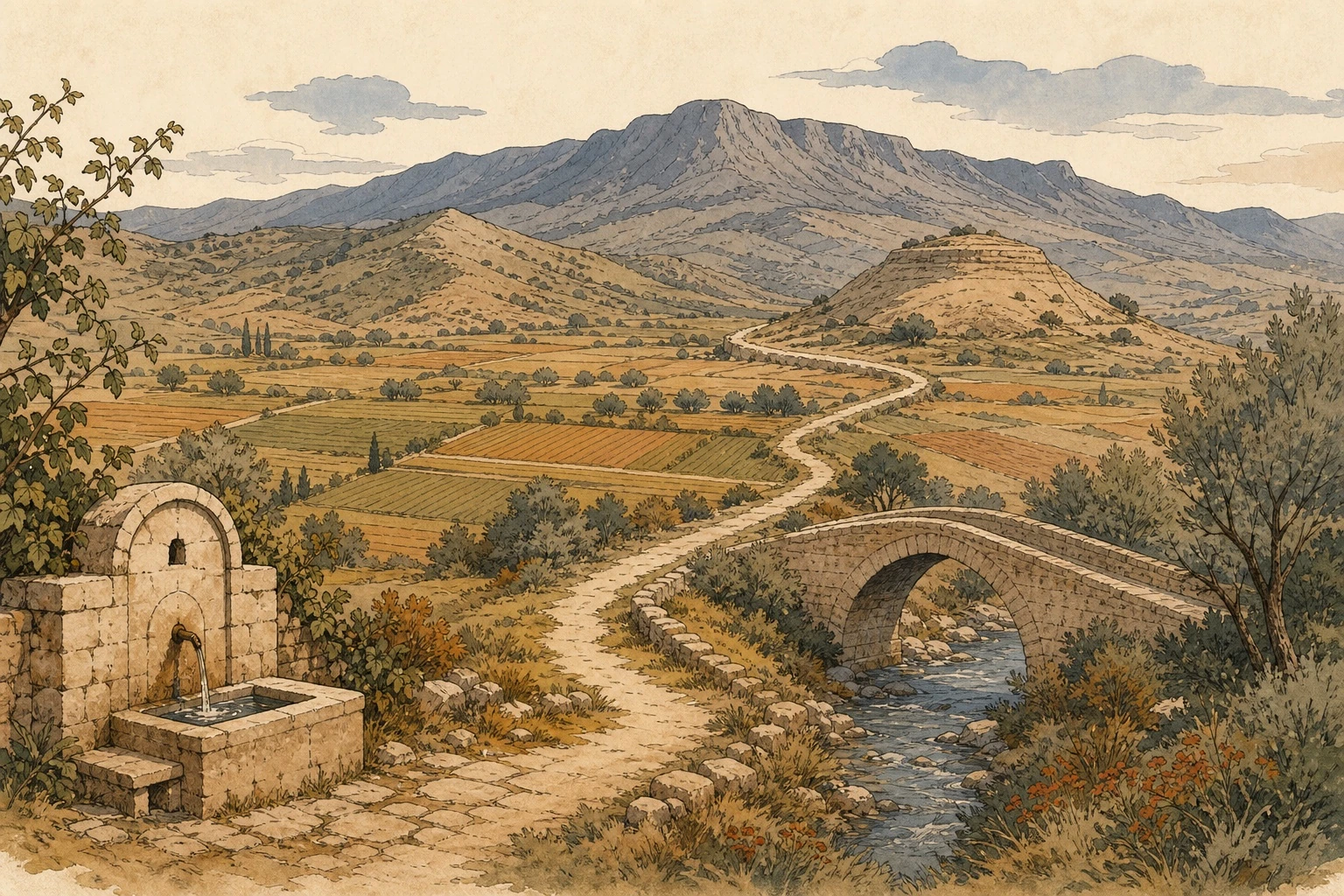
Review the essential visitor principles that respect terrain conditions, private property, and the vulnerability of cultural assets.
Go to the visitor guideHatunsaray · Lystra.